
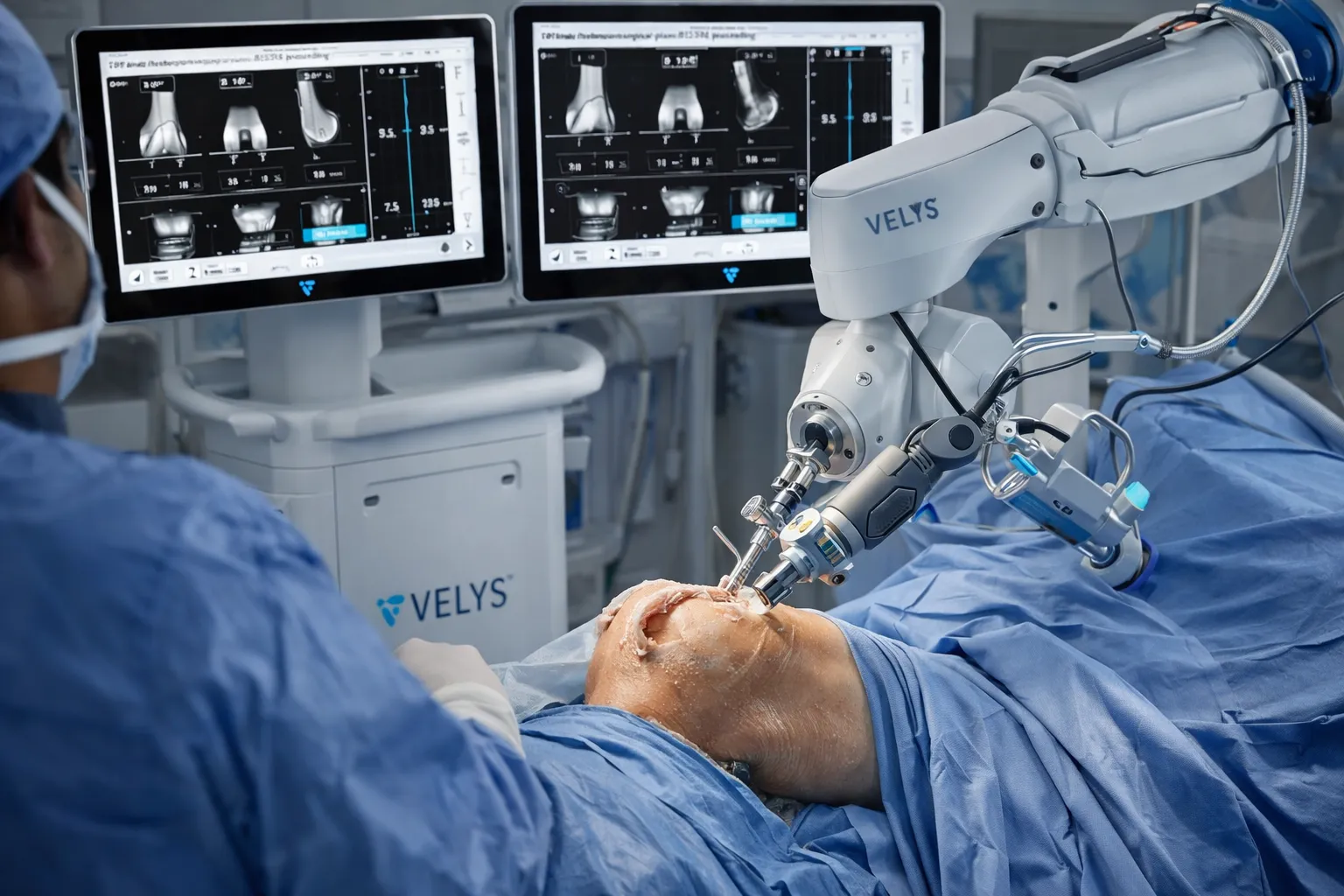
The Peak of Surgical Precision
Robotic Knee Replacement is an advanced surgical technique where the surgeon uses a robotic-assisted system to perform knee replacement with greater precision. The robotic system does not replace the surgeon but works as an intelligent assistant that provides real-time data, 3D planning, and accurate surgical guidance.
At Trinay Orthopedic Hospital, robotic technology allows surgeons to plan implant positioning based on the patient’s unique anatomy and make adjustments during surgery to achieve the best possible alignment and stability.
Why Go Robotic?
While traditional manual surgery is successful, robotics eliminates the subtle human variations that can affect long-term comfort. The benefits include:
- Higher Surgical Precision: Robotic systems help reduce human error and ensure accurate implant positioning.
- Real-Time Surgical Data: Surgeons receive live feedback during surgery to improve decision making.
- Personalized Surgery: Implant placement is customized according to the patient's anatomy.
- Less Soft Tissue Damage: The robotic system helps protect surrounding ligaments and tissues.
- Faster Recovery: Patients often experience less post-operative pain and faster rehabilitation.
Personalized Implant Positioning
Every patient’s knee anatomy is different. Robotic technology allows surgeons to create a personalized surgical plan before the procedure. Using detailed imaging and robotic guidance, the surgeon can position the implant accurately to restore natural knee movement and improve joint stability.
Natural Knee Feel
Robotic surgery helps achieve optimal knee alignment and ligament balance. Because of this high precision, many patients experience a more natural feeling knee after surgery with improved stability and comfort during daily activities.
Tissue-Sparing Techniques
Robotic-assisted knee replacement minimizes unnecessary damage to surrounding tissues. The system helps remove damaged bone with high accuracy while preserving healthy bone and ligaments. This tissue-sparing approach contributes to reduced post-operative pain and faster recovery.